


Diagnoses such as flatfoot and clubfoot deformity are not uncommon in young children, so it is important to take prompt steps to prevent further complications.
This diagnosis is established when the shape of the foot begins to resemble the letter X, the arch changes, and the foot axis changes.
Bunions mean that the heel and toes look outward, while the foot itself looks downward.
Lack of treatment can cause the tendon to begin to perform its natural role very poorly, and the baby will quickly begin to tire and experience ongoing pain.In this case, postural curvature begins to be observed, and the child is unable to move normally and fully.He always had to limit himself to outdoor games.And as we age, our muscle structure will shrink more and more, eventually leading to disability.Treatment of this pathology is carried out using a comprehensive approach, an important point of which is that the patient wears special orthopedic shoes.
product requirements
Many foot pathologies require the wearing of medical shoes.
Features of instep support
When producing high-quality therapeutic shoes, it is necessary to use special shaped lasts with anatomical contours, as well as insoles with built-in instep support.They are responsible for the correct formation of the leg arch.
molded background
When producing high-quality therapeutic shoes, dense heels made of thermoplastic are used.Each size has its specific background parameters.
shoe height
When making such models, great attention is paid to the formation of the child's legs and their fixation.This is achieved due to the height of the shoe and reliable and strong fasteners and Velcro.
Material
Due to the high demands placed on models with therapeutic effects, the use of high-quality materials is allowed.Only models made of natural materials ensure proper ventilation of the feet.
sole
One of the characteristics of the sole is its structure and density.The back of it is strong due to the instep support, but the front must be elastic and flexible so that the foot does not feel restricted during movement.
Moreover, this sole has special rolling capabilities in the toe area, allowing the foot to be positioned as correctly as possible when moving.
Useful properties
In the treatment of pathologies such as hallux valgus, one should not choose a preventive mode, but a specialized treatment plan.Orthopedic bunion shoes for children must comply with certain points in order to fully demonstrate their use.Orthopedic shoes with high tops and high backs are considered therapeutic.They will help the foot make correct movements and assume the correct position to prevent further deformation.Thanks to the low heel, a rigid fixation is achieved, ensuring the correct position of the foot.
The use of such therapeutic shoes in therapy is mandatory, since they act as specific simulators and are responsible for the even distribution of the load during movement.This ensures full function of muscles that are unable to perform their role due to deformation.
Due to the use of orthopedic shoes in treatment, the following happens:
- Develop correct gait and posture;
- Prevent further deformation;
- Muscles and ligaments develop without pathological changes;
- Reduce the load on the entire spine.
Can I choose the model myself?
Everyone should know that successful correction of any type of leg deformity is possible only in childhood.Therefore, it is important to seek help from an orthopedic surgeon as early as possible.The younger the child, the greater the likelihood of a successful and complete recovery.
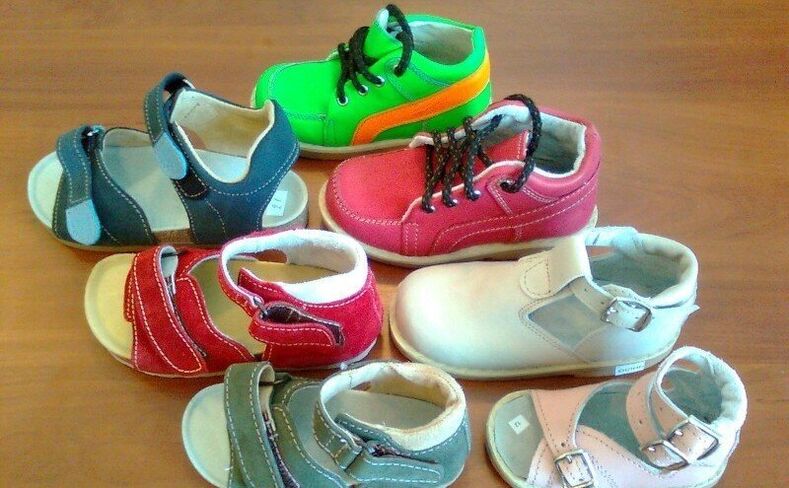
You should not choose a shoe type to treat a deformity on your own; this can be done by a professional after a thorough examination and certain tests.Also, you shouldn't convince yourself that wearing such shoes will 100% cure your child; that's probably not going to happen.Pathology may still be present, but to a lesser extent.
Only using a comprehensive approach can you increase your chances of full recovery.
It is important to remember that you should not wear orthopedic shoes for flat valgus deformity all the time.This can lead to a completely different type of muscle atrophy.
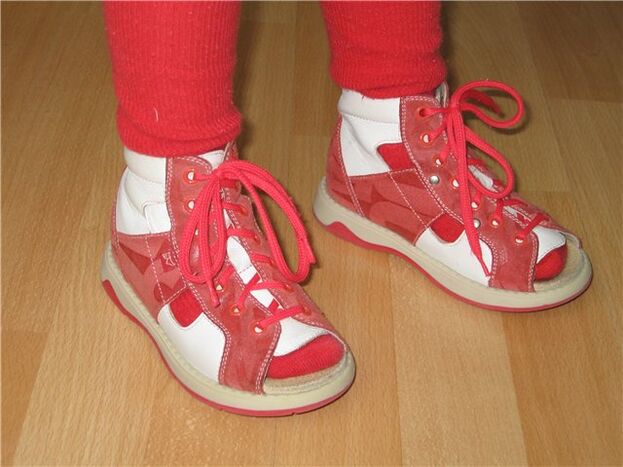
basic advice
You should pay attention to the following points when purchasing a treatment model:
- To get the results you want, you should choose the correct size whenever possible.Shoes shouldn’t be too big or too small—just the right size for your feet.The child's feelings are very important here.
- Under no circumstances should you purchase an orthopedic model without a child present.Every shoe should be tried on.Not only does the baby have to wear everything, but he also has to walk a little bit.
- Don’t forget that children’s feet grow very quickly, just like their own, so it’s important to monitor sizing and replace shoes at least every 6-8 months, and sometimes more often.
- Orthopedic shoes for children with bunion deformity should have a toe box that is wide enough so that the toes will not be stressed when walking.Your baby's gait needs to be firm and confident; therefore, models with closed toes should be preferred.
- When choosing, due attention should be paid to the soles.Soles that are too stiff reliably protect the foot from sprains, but run the risk of developing flat feet.Therefore, in addition to being dense at the back of the sole, the front of the shoe should be flexible enough so that it bends easily when the child moves.
- An anatomically correct insole should have instep support, which will ensure the correct fixation of the foot so that all loads can be distributed correctly and evenly.
- Orthopedic shoes must have reliable and high-quality Velcro and latches to ensure a snug fit.
- To prevent your feet from sweating and keep them dry at all times, give preference to models made of breathable leather.
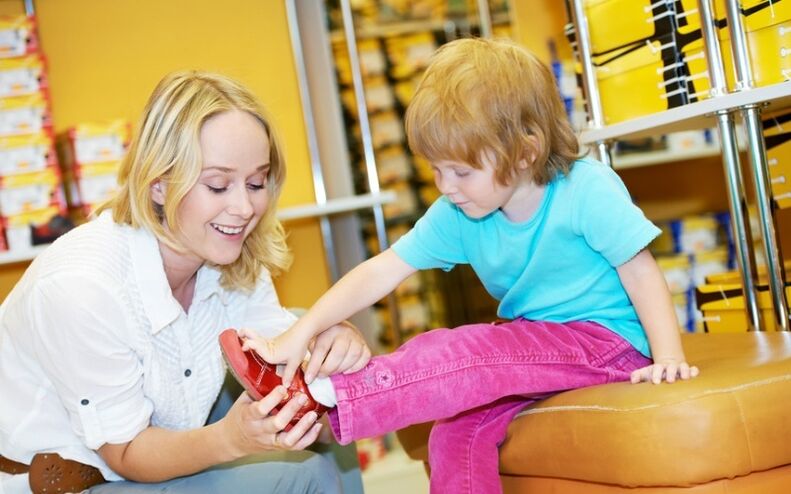
It is worth noting that for children with healthy feet, it is also recommended to purchase an orthopedic model to play a preventive role.But such shoes will be slightly different than therapeutic shoes.The purpose of preventive shoes is simply to distribute the load correctly and prevent the development of many problems of the spine and the entire musculoskeletal system.
If a bunion is present, wearing a prophylactic will not be effective; only therapeutic treatment is needed to begin to observe positive directional changes in the foot.In most cases, the wearing of therapeutic shoes is mandatory when moderate or severe disease is diagnosed.Anti-valgus shoes are sold in specialized stores and must be marked accordingly.
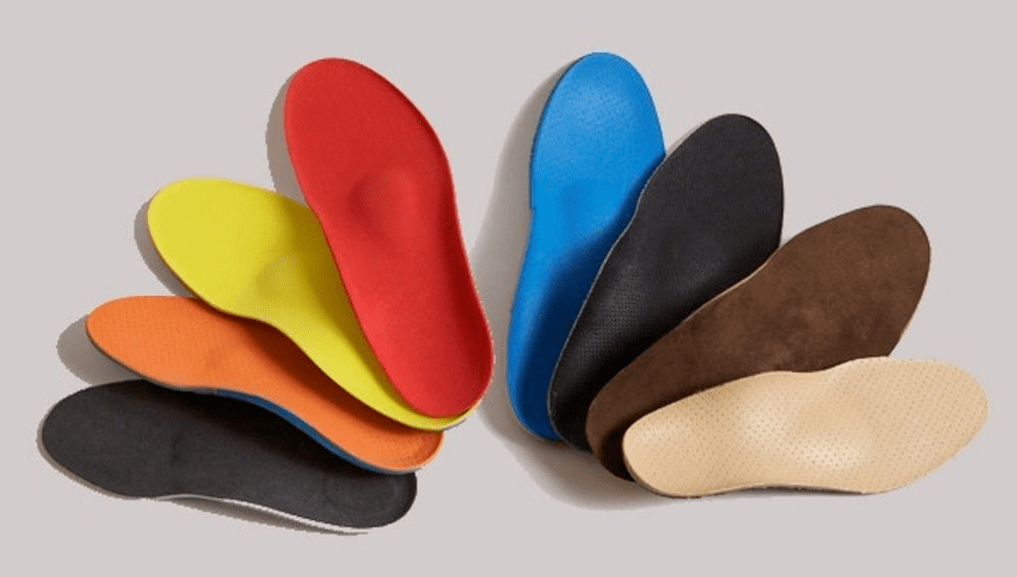
Children diagnosed with the deformity should also wear orthotic insoles at home that are inserted into permanent indoor shoes.It is also worth wearing when performing a special set of exercises to correct and strengthen the muscles of the calves and feet.However, all treatment measures should be carried out with the permission and supervision of the treatment expert.
Precautions
It turns out that orthopedic shoes for the treatment of bunions are necessary only after diagnosis, but preventive shoes are recommended for all children, as this will help in the correct formation of the musculoskeletal system.
Children with rickets, pneumonia, or acute respiratory illness are at risk for this disease.Also, unfortunately, this disease can be inherited.
To prevent bunions from developing, you need to follow simple advice.
- To minimize the chance of developing such neurological problems, you should get checked by a doctor when planning a pregnancy.
- Until 7-8 months, you should try to reduce the load on your baby's fragile legs.Many times, in trying to teach their children to walk faster, parents themselves trigger the development of the disease.
- Don't neglect a check-up from your pediatrician.
- During the first few months, take all precautions to avoid rickets in your baby.
- If possible, special exercises should be performed during free time to prevent the development of deformities.
- Make it a habit from an early age to only buy high-quality shoes for your baby.
- You should not save money for your child's health, especially on high-quality orthopedic shoes.After all, buying an inferior model can cause serious problems in the development of the musculoskeletal system of the child.
Treatment of this pathology is a rather complex process that requires time and patience.But the earlier you organize, the greater the likelihood of a positive outcome.